Why Bitcoin Runs Itself While the Dollar Needs a Human in Charge
The new Fed Chair must manage the dollar's value, but Bitcoin's supply is fixed by code. Here's what that difference means for your money.
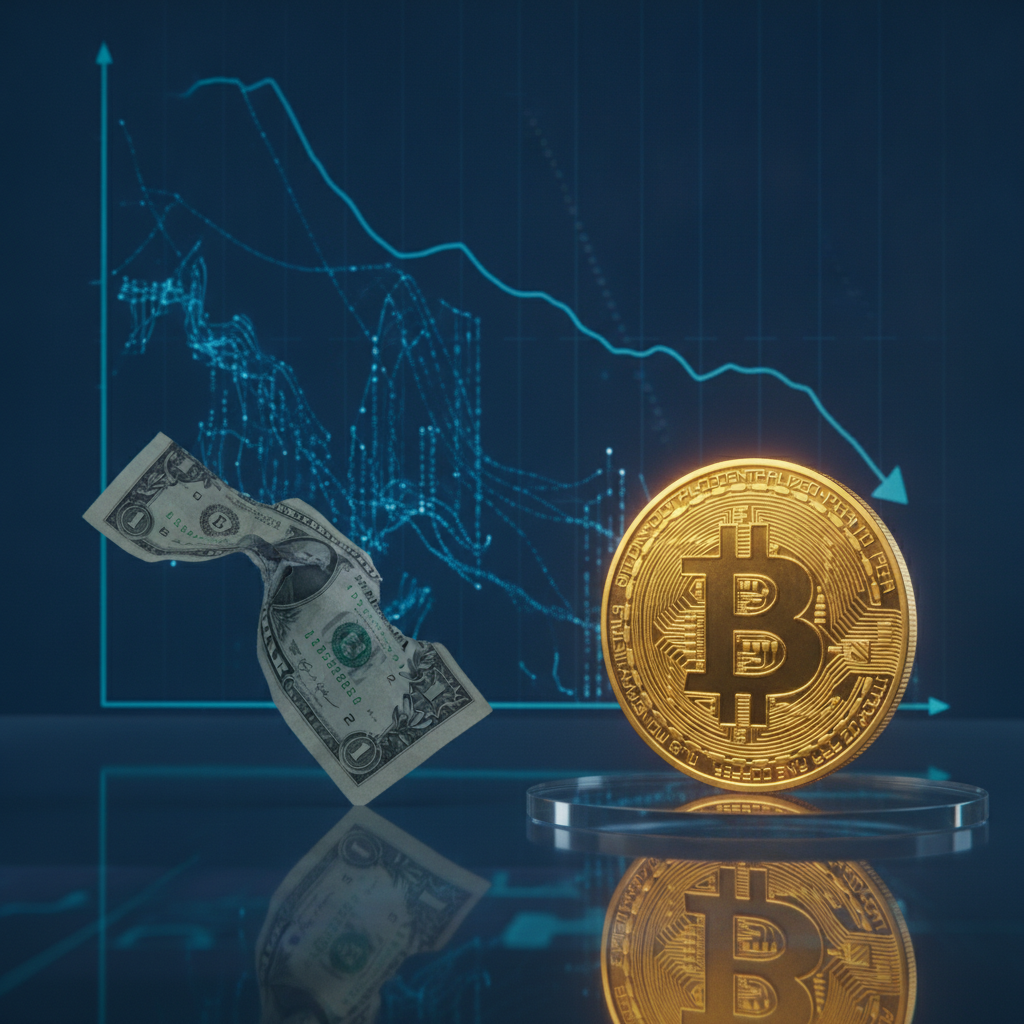
Imagine two kinds of money: one that needs a person constantly steering it, and one that runs on autopilot. That's the core idea behind a new article comparing the US dollar to Bitcoin.
Kevin Warsh just became the new Chair of the Federal Reserve (the central bank that controls the US money supply and interest rates). At his first big meeting, he signaled he wants to fight inflation (when prices rise and your money buys less) and keep the dollar stable.
The key point: The fact that Warsh has to *actively manage* the dollar shows a weakness in how regular money (called "fiat" — money backed by government trust, not gold) works. The Fed can print more money whenever it decides to, and history shows it usually does.
Here are the eye-opening numbers:
- The US dollar has lost roughly 88% of its purchasing power since 1971, when it stopped being tied to gold.
- A 1971 dollar now buys what about 12 cents buys today.
- The US money supply has ballooned to over $22 trillion.
- There will only ever be 21 million bitcoins — a hard limit no one can change.
- New coins are released on a fixed schedule that slows down every four years (called a "halving").
- No person, committee, or government can create more.
What does this mean in practice? Bitcoin doesn't promise stable prices day-to-day — its value can swing wildly. But it does promise that no policy decision can secretly "water down" the value of what you hold. The article suggests some company finance bosses are now considering holding a small portion of their cash in Bitcoin to protect against the dollar's slow erosion.
Bottom line: Even a disciplined Fed Chair proves the point — the dollar needs constant human restraint, while Bitcoin's limits are baked in from the start.
This is an AI-generated summary. Read the original article at: https://bitcoinmagazine.com/news/warsh-fed-exposes-bitcoin