US Bond Prices Fall as Middle East Shipping Fears Grow
Treasury yields rise on concerns about oil shipping disruptions through the Strait of Hormuz.
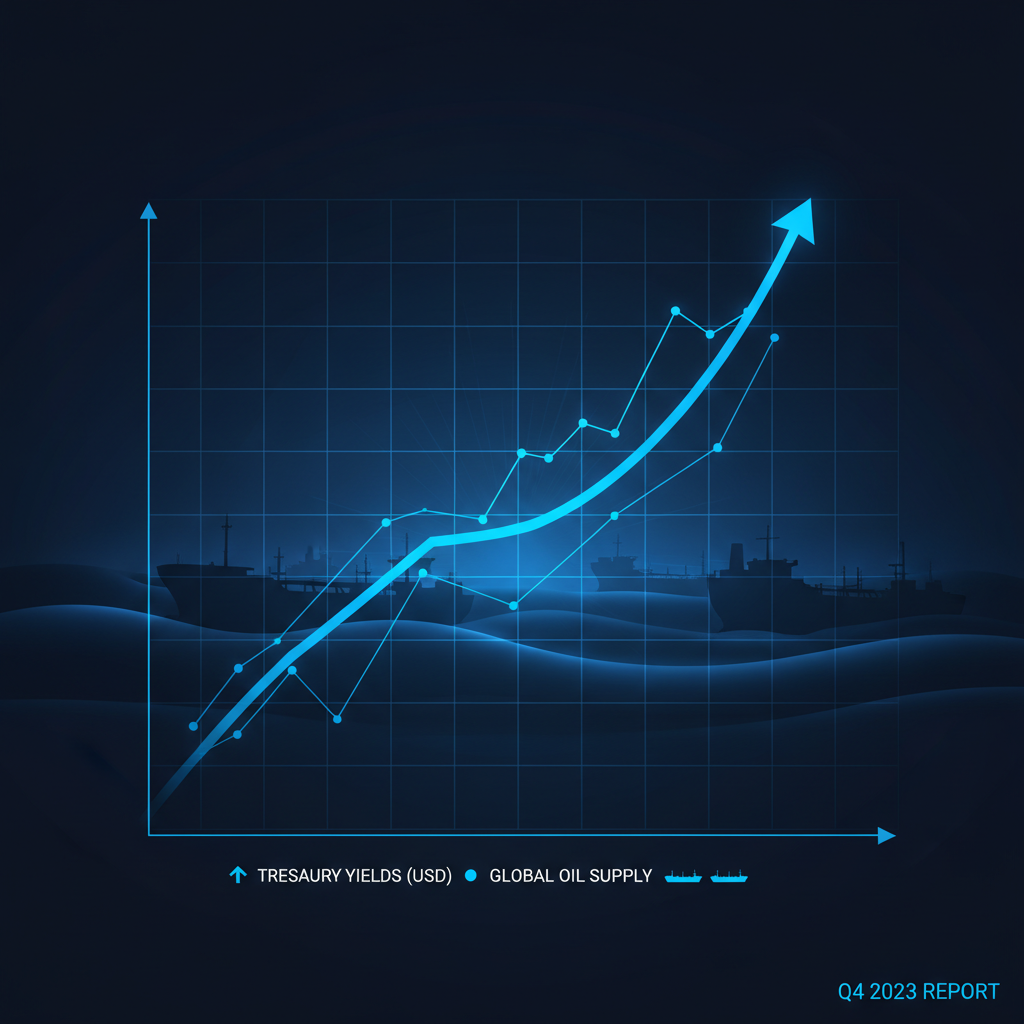
US government bond prices dropped today as investors worry about potential shipping disruptions in a crucial Middle Eastern waterway.
The concerns center around the Strait of Hormuz, a narrow passage between Iran and Oman where about 20% of the world's oil passes through. When tensions rise in this area, oil prices often jump, which can push inflation higher.
Here's what's happening: • Treasury yields are climbing (yields are the interest rates on US government bonds - when bond prices fall, yields rise) • Investors are selling bonds and moving to other assets • Oil markets are watching the situation closely
When investors fear supply disruptions (interruptions to normal shipping), they often sell "safe" investments like US Treasury bonds and buy commodities like oil. This is because oil prices typically rise when supply is threatened, while bonds can lose value if inflation increases.
Why this matters for everyday people: Higher oil prices mean more expensive gasoline and transportation costs. This can lead to higher prices for many goods, affecting your daily expenses. The Federal Reserve (the US central bank) watches these developments closely as they decide on interest rates.
Markets will continue monitoring any developments in the Strait of Hormuz, as even small disruptions can have big impacts on global energy prices and inflation.
This is an AI-generated summary. Read the original article at: https://www.investing.com/news/stock-market-news/treasury-yields-climb-amid-hormuz-disruption-concerns-93CH-4656854