Street Artist Mear One: From Graffiti to Bitcoin Revolution
LA graffiti pioneer discusses how his anti-bank protest art predicted Bitcoin's rise
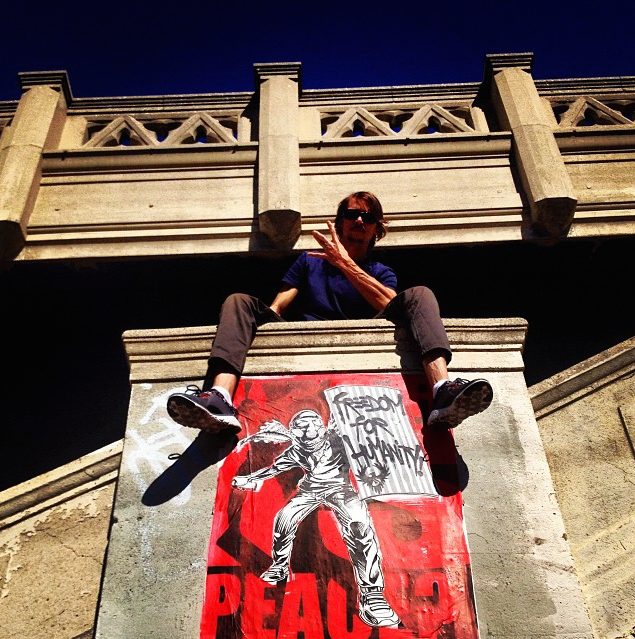 Image source: Bitcoin Magazine
A famous street artist who spent decades painting anti-bank messages on walls says Bitcoin represents the same revolution he's been fighting for since the 1980s.
Mear One, a pioneering Los Angeles graffiti artist, started spray-painting political messages on city walls when such acts were illegal. His early work attacked wars and the banking system - the same issues that would later inspire Bitcoin's creation. Now, he's showcasing his revolutionary art at the Bitcoin 2026 Conference in Las Vegas.
The artist sees clear connections between street protest and cryptocurrency (digital money like Bitcoin). "When I discovered Bitcoin, it immediately reminded me of the graffiti, hip hop, and punk rock culture I grew up in," he explained. Just as graffiti artists work outside the law to spread their message, Bitcoin operates outside traditional banking systems.
His journey includes: • 1980s-1990s: Created anti-war street art during the Gulf War • 2004: Toured nationally with famous artists spreading anti-corporate messages • 2011: Participated in Occupy Wall Street protests against big banks • Today: Sees Bitcoin as the solution to problems he's been highlighting for decades
Mear One believes that wars and economic crises stem from the same broken financial system. He points out that Bitcoin's creator, Satoshi Nakamoto, embedded a newspaper headline about bank bailouts (government rescuing failing banks) into Bitcoin's first block of code - showing that cryptocurrency was born from protest against traditional finance.
The artist's message is simple: both street art and Bitcoin represent freedom from a system that doesn't serve ordinary people. His work, once considered vandalism, now sits in major museums - perhaps predicting Bitcoin's own journey from the margins to the mainstream.
This is an AI-generated summary. Read the original article at: https://bitcoinmagazine.com/culture/relics-of-a-revolution-part-ii-false-profits-and-freedom