Stock Market Loses $1.8 Trillion in Worst Day Since 2025
Major US stock indexes crashed Friday after strong jobs data sparked fears of higher interest rates.
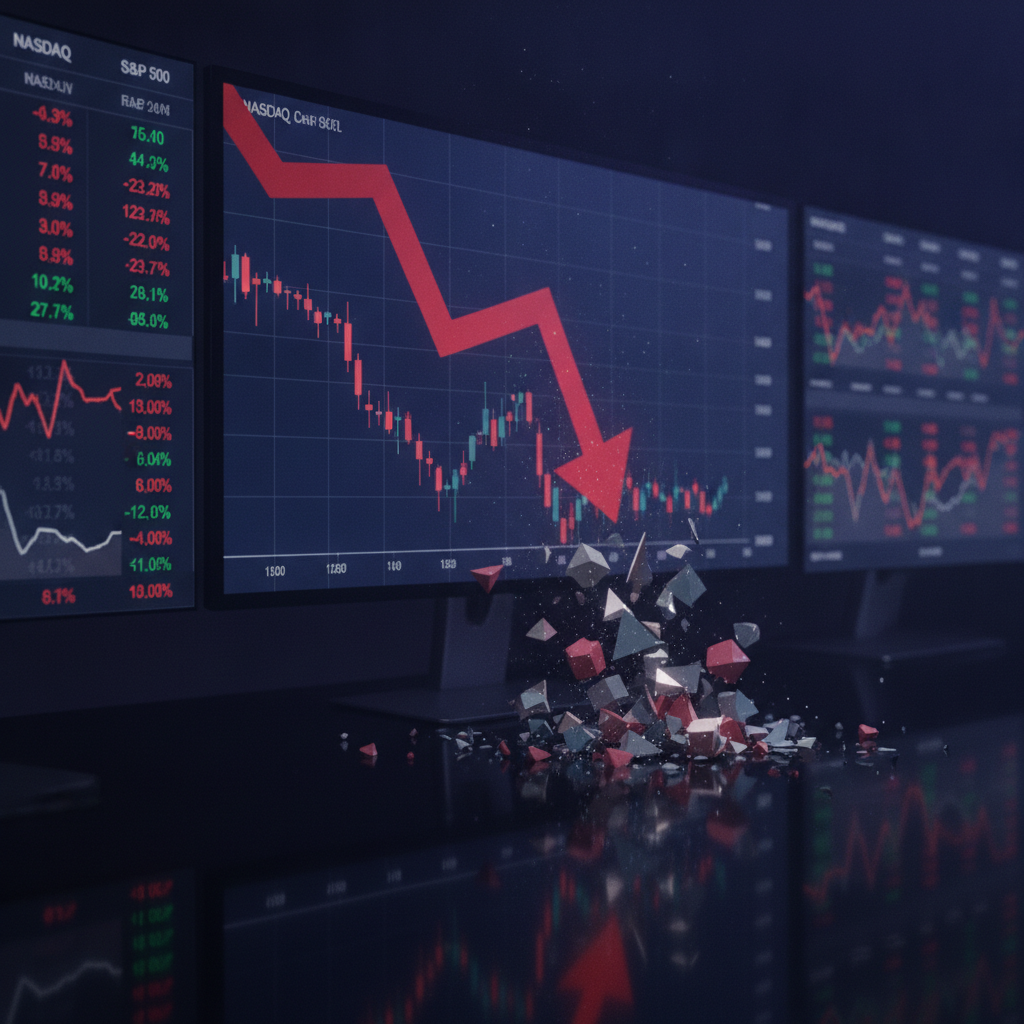
The US stock market experienced its worst day in over a year on Friday, with $1.8 trillion vanishing from major companies' values in a single trading session.
The technology-heavy Nasdaq index (a collection of tech company stocks) fell by 1,121 points - its biggest one-day point drop ever recorded. This represents a 4.2% decline, the worst since April 2025. The broader S&P 500 index (tracking 500 major US companies) dropped 2.6%.
What triggered the selloff? • Strong jobs data showed the US economy adding more jobs than expected • This "good news" worried investors that the Federal Reserve (America's central bank) might raise interest rates • Higher rates make borrowing more expensive and can slow down company profits
The selloff particularly hit semiconductor companies (firms that make computer chips), which had been soaring due to artificial intelligence excitement. Micron Technology, which had gained 170% in just two months and reached a $1 trillion valuation, was among the hardest hit.
Adding to investor concerns, reports emerged that tech giants Meta and Alphabet might sell new shares to fund their AI investments, potentially diluting existing shareholders' stakes.
Why does good economic news hurt stocks? When the economy runs too hot, the Federal Reserve often raises interest rates to prevent inflation (rising prices). Higher rates make bonds more attractive than stocks, causing investors to sell.
This is an AI-generated summary. Read the original article at: https://www.marketwatch.com/story/s-p-500-sees-1-8-trillion-wipeout-nasdaq-tallies-biggest-point-drop-on-record-heres-what-investors-need-to-know-about-fridays-selloff-4eb7b490?mod=mw_rss_topstories