Stablecoins Split Roles: USDT for Payments, USDC for Trading
The two biggest stablecoins now serve different purposes, while euro-based stablecoins grow fast under new EU rules.
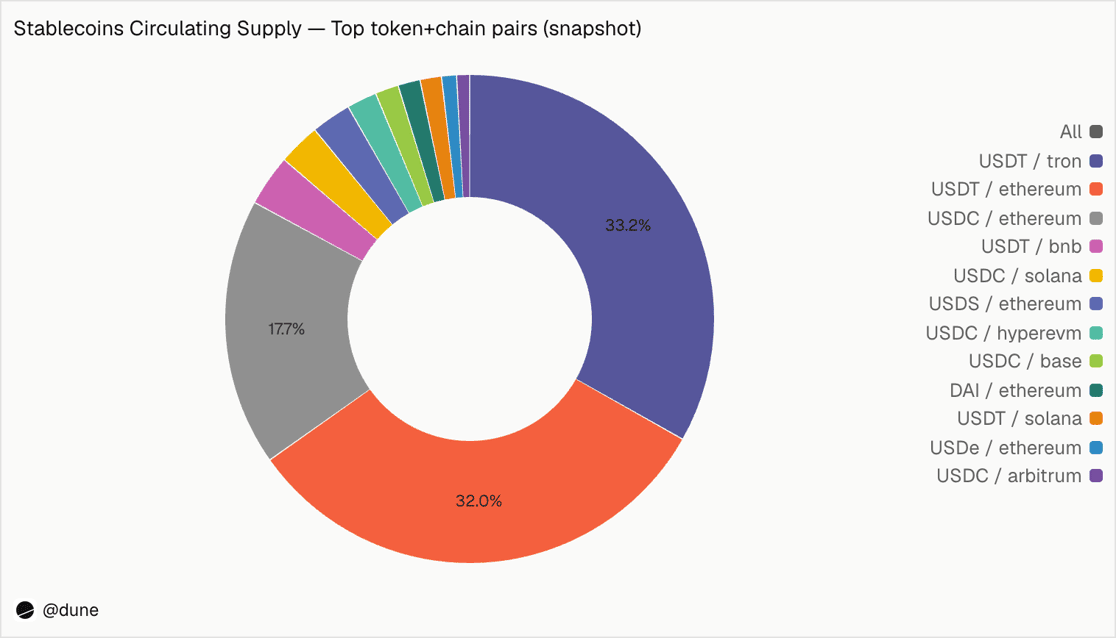 Image source: CoinTelegraph
The world of digital money is becoming more organized — and it's starting to look a lot like traditional banking.
What are stablecoins? They are digital coins designed to always be worth the same as a real-world currency, like $1 US dollar. Unlike Bitcoin, whose price jumps around wildly, stablecoins stay steady, making them useful for payments and trading.
The two biggest stablecoins are picking separate jobs. New data shows Tether's USDT and Circle's USDC are no longer fighting over the same customers:
- USDT has become the go-to coin for payments — it handled $95 billion in business-to-business transfers in the first half of 2026.
- USDC dominates DeFi (decentralized finance — financial services like lending or trading that run on blockchain without banks), processing trillions in monthly volume.
Strategy sells Bitcoin. The company Strategy, famous for buying and *never* selling Bitcoin, sold 3,588 BTC worth $216 million to pay dividends (regular cash payments to shareholders). It still holds 843,775 BTC and kept its $2.55 billion cash reserve, so this looks like a choice for flexibility rather than a sign of trouble.
Even skeptics are joining in. Vanguard, a giant investment firm long doubtful about crypto, is now hiring a head of digital assets. This signals that tokenization (turning real assets like funds into blockchain-based tokens) is becoming a priority across Wall Street.
The takeaway: Stablecoins are maturing and finding clear roles, Europe is building its own version, and even the biggest doubters are getting on board.
This is an AI-generated summary. Read the original article at: https://cointelegraph.com/news/crypto-biz-how-stablecoins-found-their-niche?utm_source=rss_feed&utm_medium=rss&utm_campaign=rss_partner_inbound