Bitcoin Drops Below $80,000 as $1 Billion in Crypto Bets Wiped Out
Bitcoin fell below $80,000 for the first time in a month as hot inflation data triggered nearly $1 billion in forced sell-offs.
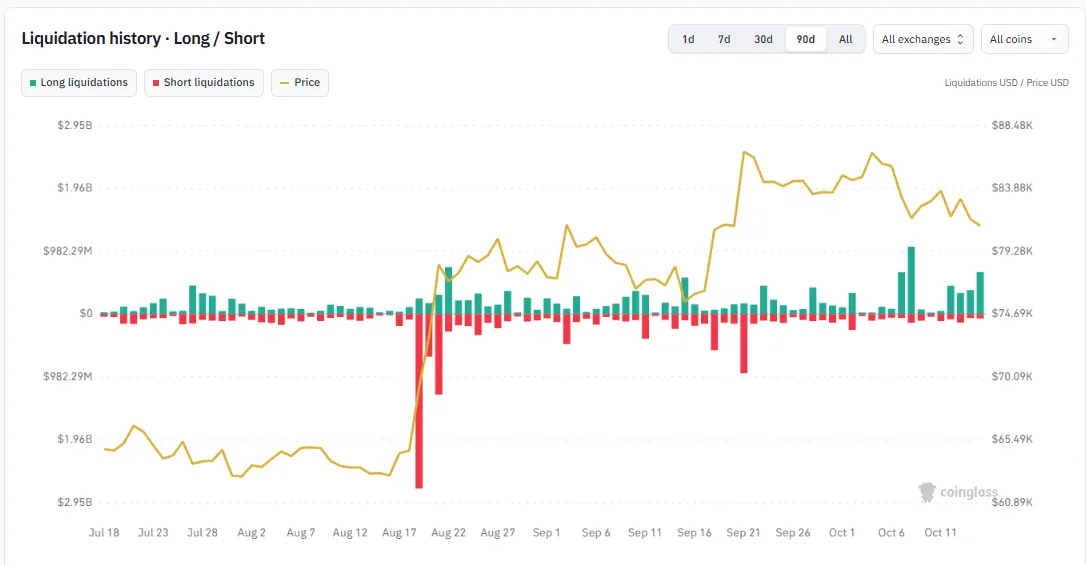 Image source: Decrypt
Bitcoin just had a rough day. The world's biggest cryptocurrency fell below $80,000 on Thursday for the first time in over a month, before bouncing back to around $82,000. The crash wiped out nearly $1 billion in risky bets across the crypto market.
What happened to traders?
Many traders use something called leverage (borrowing money to make bigger bets). When prices move against them, exchanges automatically close their positions — this is called a liquidation. These forced sales push prices even lower, triggering more liquidations in a chain reaction.
Here are the key numbers:
- $948.22 million in bets liquidated in 24 hours
- 177,440 traders affected
- 90.6% were "long" bets (traders betting the price would go UP)
- Ethereum led losses with $282 million liquidated, Bitcoin close behind at over $200 million
The trigger was inflation (the rate at which prices for everyday goods rise). Two reports came in hotter than expected:
- Consumer prices rose 3.7% (forecast was 3.6%)
- Producer prices (business costs) jumped 6.3% (forecast was 5.5%)
Why does inflation hurt Bitcoin?
High inflation pushes the Federal Reserve (America's central bank) toward raising interest rates (the cost of borrowing money). Higher rates make safe government bonds more attractive and make borrowing expensive — draining the cheap money that crypto traders rely on.
What's next?
Bitcoin is now trading about 2% below the average price paid by U.S. ETF (investment fund) buyers near $82,300, putting those investors at a loss. Analysts say Bitcoin needs steady buying — not just a quick bounce — to recover. The Fed's next rate decision comes on October 28.
This is an AI-generated summary. Read the original article at: https://decrypt.co/381044/bitcoin-whipsaws-crypto-liquidations-near-1-billion