Bitcoin Drops Below $79,000 as Economic Worries Grow
Bitcoin fell sharply on Friday, mirroring small company stocks as investors worry about the economy.
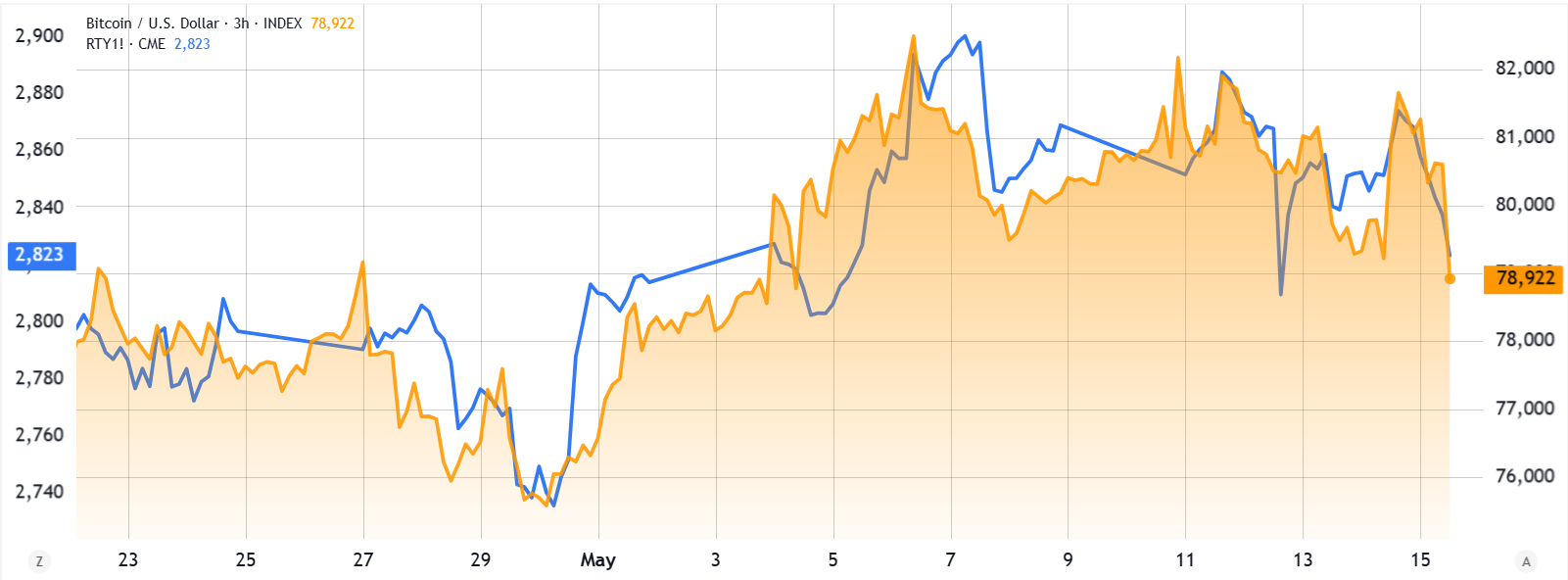 Image source: CoinTelegraph
Bitcoin's price tumbled below $79,000 on Friday, following a pattern similar to small company stocks in the US. This drop suggests that broader economic concerns are affecting cryptocurrency prices.
What's causing the drop? Several factors are making investors nervous: • Oil prices jumped from $99 to $106 per barrel (the price of crude oil), which could make everything more expensive (inflation) • The Iran war continues, creating uncertainty in global markets • Interest rates on government bonds (loans to governments) hit their highest levels in decades • No progress was made at the US-China Summit on reducing import taxes (tariffs)
Bitcoin is currently behaving like a "risk-on" asset - meaning when investors feel nervous about the economy, they sell it first (just like they do with small company stocks). The cryptocurrency tried several times to break above $82,000 but failed, showing that traders aren't confident about price increases right now.
Is there any good news? Potentially, yes. When investors pull money out of government bonds (fixed-income investments that pay steady interest), they often look for other places to invest. This could eventually benefit Bitcoin as that money searches for better returns.
For now, Bitcoin remains vulnerable to economic worries. Its price will likely stay volatile (moving up and down quickly) until investors feel more confident about the global economy.
This is an AI-generated summary. Read the original article at: https://cointelegraph.com/markets/bitcoin-slides-below-79k-macro-fears-can-fixed-income-outflows-save-it?utm_source=rss_feed&utm_medium=rss&utm_campaign=rss_partner_inbound